“Analysing Arguments” is going to be an ongoing series of posts which analyse arguments found in the news and online media. Some good background material for this is Coursera’s enormously popular course Think Again: How to Reason and Argue, and the book Understanding Arguments: An Introduction to Informal Logic. You might also find the primer How to Argue Online useful. Note: the above course is scheduled for its next run on August 26 2013. We highly recommend signing up – it’s a life-changer, even if you’re already familiar with logical fallacies.
In this first installment of the series, I’m going to look at two recent articles against the death penalty. The first is by Member of Parliament Kanimozhi, and the second is by American lawyer Alan Dershowitz. Both arguments are justifications: they attempt to give good reasons for believing certain conclusions. They are also moral arguments – their conclusions are propositions of value, and so their premises are a mix of propositions of fact and of value.
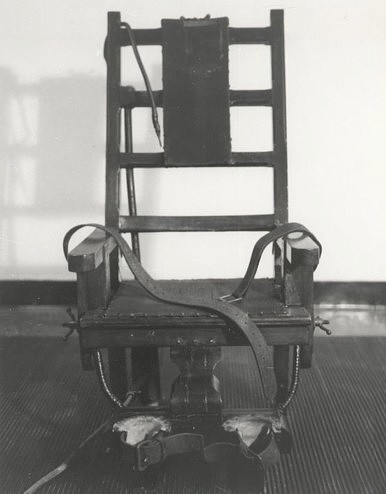
1. “Why the death penalty must end” – Kanimozhi
The conclusion Kanimozhi is arguing for is clear from the title itself – that the death penalty in India should be abolished. Here is my attempt at reconstructing her argument. I first extracted the relevant portions from the entire piece and listed them out as premises. Then to those, I added suppressed premises (marked SP), based on some standard pro-death penalty arguments.
————————————————————————————————-
1. “Founding fathers” like Babasaheb Ambedkar thought the death penalty should be abolished.
2. Getting clemency is only open to the wealthy and powerful.
3. Innocent people are executed.
4. The process of deciding who should be on death row is arbitrary and biased.
5. There is no credible evidence that the death penalty has any deterrent effect on crime.
6. Capital punishment is merely revenge, and revenge is not a good enough reason to execute criminals.
7. The rest of the world is moving away from using the death penalty.
8. The “righteous anger” of people and victims’ families, and their desire for comfort and closure by punishment of criminals, are not good enough reason to execute the criminals. (SP)
9. These criminals can be prevented from committing future crimes. (SP)
————————————————————————————————-
10. The death penalty should be abolished. (From 1-9.)
————————————————————————————————-
Premise #1 could be an appeal-to-authority fallacy, but I think it’s reasonable – the people who wrote our constitution knew something about justice and their views do carry some weight. In support of premise #3, she gives several examples of innocent people being executed. She backs up premise #4 with views from the Supreme Court and studies from Amnesty International and the People’s Union for Civil Liberties (though she doesn’t link to these studies).
Coming to premise #5 i.e. the issue of deterrence – she backs it up with “a comprehensive study done last year in the United States”, but again, does not provide any link. This weakens the argument I think, because deterrence is one of the key issues in the death penalty debate. For example, if you can show that the death penalty does not have a deterrent effect, you instantly weaken the utilitarian argument in favour of the death penalty (i.e. it’s okay to sacrifice a few innocents if you prevent a larger number of crimes). Premise #7 again points to the fact that others are against the death penalty – for example she points out that the European Union wants it abolished, and she implies that they must have thought it through, and we should follow their lead.
Coming to the suppressed premises. Reading some pro-death penalty arguments online, I found that a common theme is that the death penalty is needed to bring comfort and closure to victims’ families, and to give citizenry a feeling of satisfaction that a heinous crime has not gone unpunished. So an anti-death penalty argument must reject this. Another point the pro- camp makes is that criminals get out of jail and commit more crimes. So the anti- argument needs to take this into account too.
I think the argument above gives a good “pathway” from premises to conclusion, such that if the premises are likely to be true, then the conclusion is likely to be true. The debate about the death penalty can then become a debate about the premises listed above. (Some other premises that could enter the equation come from the deeper philosophical questions about moral responsibility.)
2. “Dzhokhar Tsarnaev should not face the death penalty, even for a capital crime” – Alan Dershowitz
Alan Dershowitz’s piece had me scratching my head because of this particular paragraph:
There are two fundamental reasons why the death penalty should not be imposed in this case. The first is the obverse of the argument that if anyone deserves the death penalty, it is this defendant. That may will be true. But it follows that if this defendant does not deserve the death penalty, then no one does.
In other words, a decision to withhold the death penalty in this case would be a powerful argument against the morality of the death penalty in any case. As a lifelong opponent of capital punishment in all cases, I would argue that not applying it in this case could have a considerable impact on the movement toward abolition.
Initially I thought this is circular reasoning, but now I don’t think it is. Here is the whole argument along with the other reasons he gives:
————————————————————————————————-
1. The death penalty is always wrong.
2. Not executing terrorists like Dzhokhar Tsarnaev would strengthen the message that the death penalty is always wrong.
3. Executing terrorists is seen as martyrdom by other terrorists.
4. Martyrdom is a powerful incentive for terrorists to carry out acts of terrorism. (SP)
5. Executing a terrorist does not have much deterrence effect on other terrorists.
6. Political calculations (US politics) will put pressure on the court to execute.
7. Life and death decisions should not be made based on political calculations.
————————————————————————————————-
8. We should not execute Dzhokhar Tsarnaev. (From 1-7.)
————————————————————————————————-
The reason I’ve put “The death penalty is always wrong” as a premise is that this piece is not self-contained – the writer indicates his reasons for opposing the death penalty in general (“As a lifelong opponent of…”) have been given by him elsewhere. I assume these reasons are similar to the ones Kanimozhi gives above.
Incidentally, the reason I picked these two arguments is that there is a link between them: in India, the death penalty is allowed for the “rarest of the rare” cases i.e. the exceptional cases that Dershowitz argues should still not be permitted.
 Sunil D'Monte
You must be logged in to post a comment.